Notice: The contributors to Her Metabolic Health are researchers and advocates, not licensed medical professionals. Content is for informational purposes only. Always consult your physician before beginning or altering any medication or protocol.









Notice: The contributors to Her Metabolic Health are researchers and advocates, not licensed medical professionals. Content is for informational purposes only. Always consult your physician before beginning or altering any medication or protocol.

3/21/2026
Author Cat Clark
Edited by Dee Stone
At Her Metabolic Health, our mission is to address the physiological drivers of obesity by moving beyond the behavioral "willpower" model and focusing on the underlying neuro-metabolic signaling. We treat obesity not as a lack of discipline, but as a complex dysregulation of the adipose-brain communication hub.
By integrating the latest clinical research (2023–2026), our protocol focuses on five pillars of metabolic restoration. Her Metabolic Health is dedicated to providing the pharmacological and physiological tools necessary to bridge the willpower gap. It is time to replace the myth of discipline with the reality of biology.
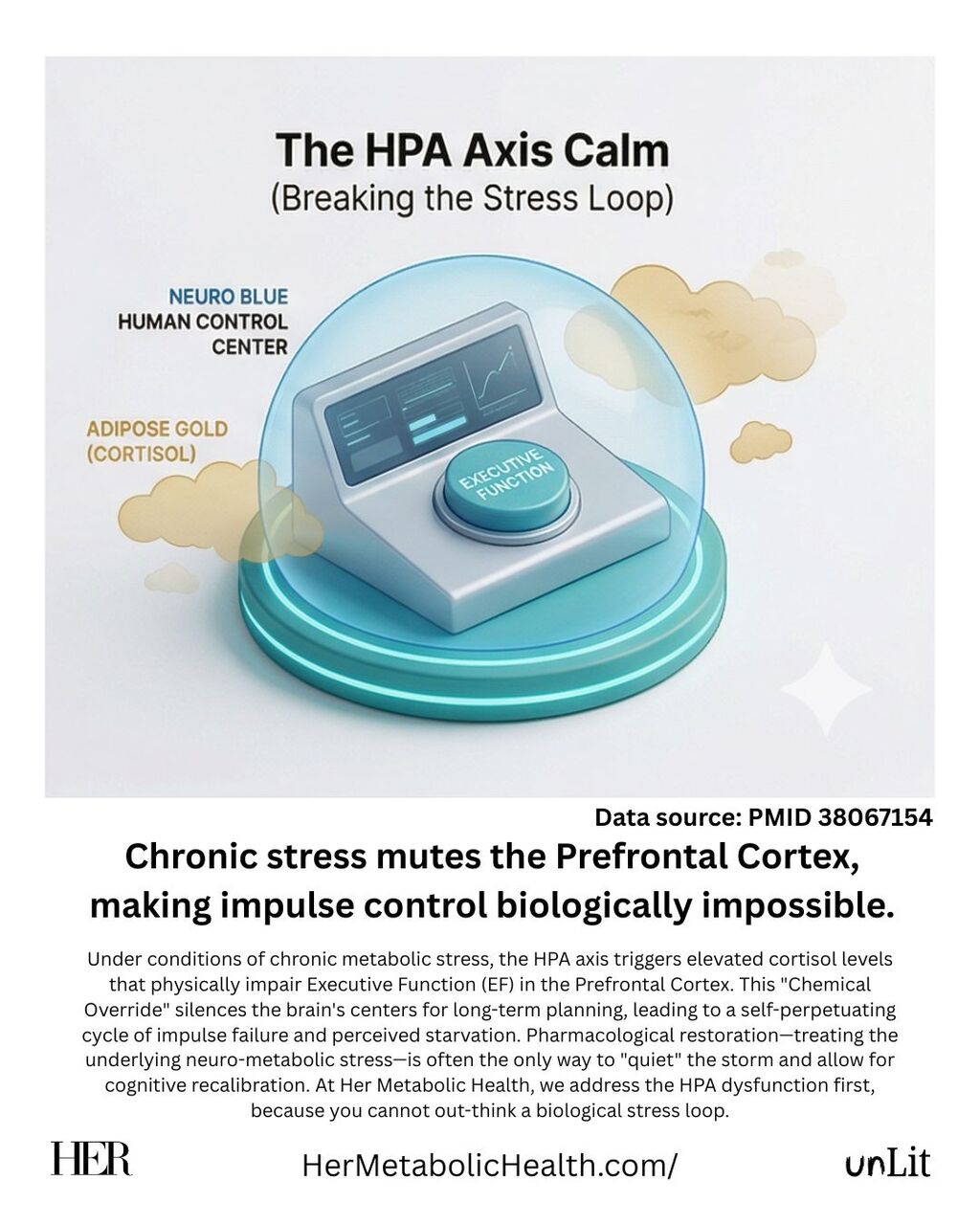
Chronic metabolic stress triggers a cascade within the Hypothalamus-Pituitary-Adrenal (HPA) axis, resulting in elevated systemic cortisol—the catalyst for what we term Adipose Gold accumulation.
Clinically, this sustained stress loop induces a "Chemical Override" in the brain. Elevated cortisol levels physically impair Executive Function (EF) within the Prefrontal Cortex—the Neuro Blue center for long-term planning and impulse control. When this center is muted, the brain enters a state of perceived starvation, making behavioral control biologically impossible. At Her Metabolic Health, we address HPA dysfunction first, because the biological stress loop must be quieted before cognitive recalibration can occur.
Clinical Reference: PMID 38067154

We identify the "Willpower Gap" as a clinical signaling dysregulation within the dopamine reward system. In patients with chronic obesity, "Food Noise" is the result of an overactive Nucleus Accumbens (NAc/VTA).
Our protocol utilizes GLP-1 receptor agonists as a pharmacological "volume dial." By modulating dopamine reward intersections, these interventions allow for the restoration of executive function. We view this not as a behavioral shortcut, but as a necessary restoration of neurological balance to facilitate long-term maintenance.
Clinical Reference: PMID 40628707
The Enteric Nervous System (ENS), or the "Second Brain," regulates more than simple digestion; it is a fundamental pillar of neurological clarity. We focus on the high-speed, two-way communication channel maintained by the Vagus Nerve Axis.
When gastric emptying or gut microbiota are dysregulated, the resulting maladaptive signals to the brain manifest as mood swings, brain fog, and intense cravings. By stabilizing these feedback loops, we aim for Communication Restoration, ensuring the ENS provides the data necessary for cognitive stability.
Clinical Reference: PMID 399535478

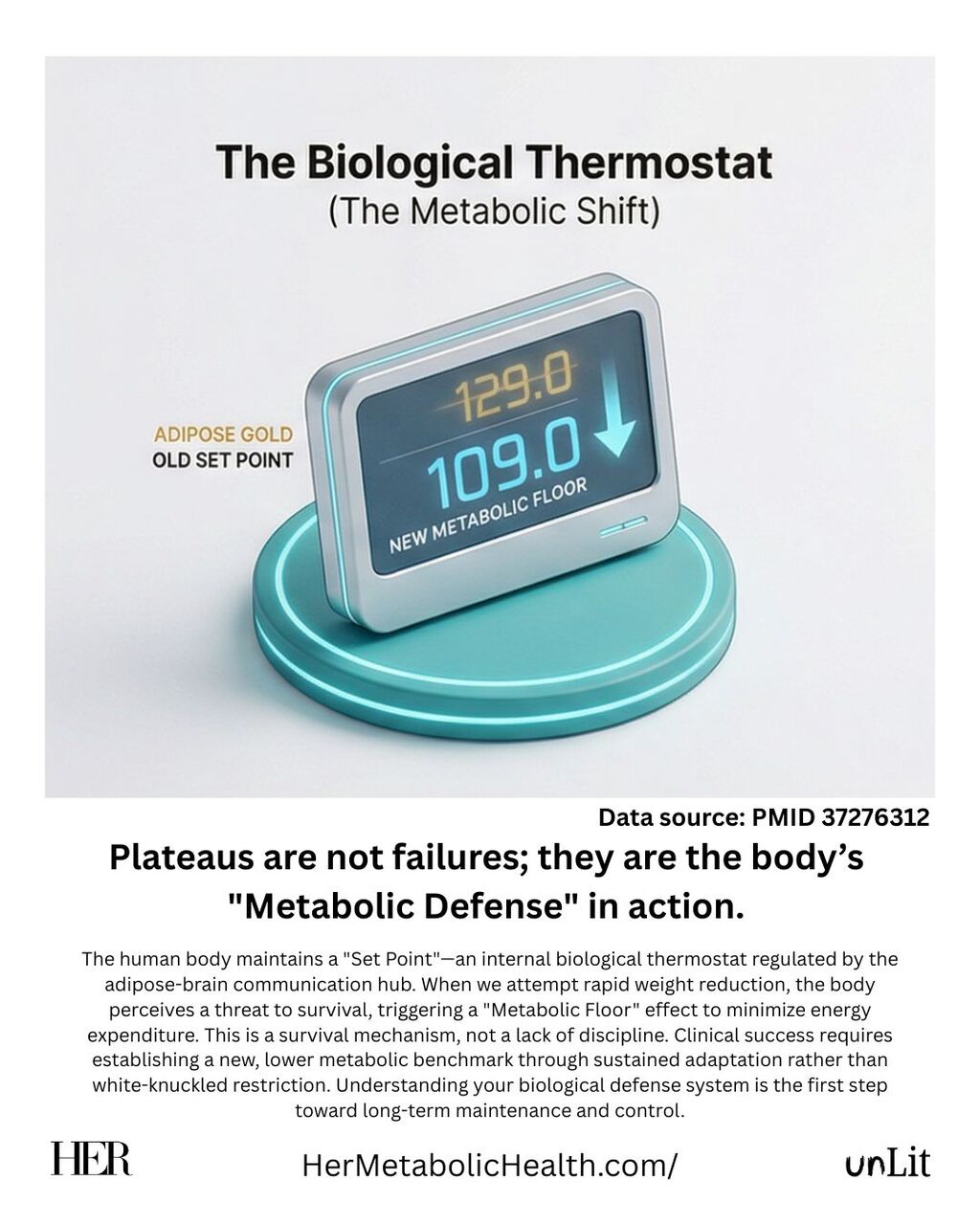
The human body maintains a "Set Point"—an internal thermostat regulated by the brain's interpretation of energy stores. When rapid caloric restriction is attempted, the body perceives a threat to survival, triggering a "Metabolic Floor" effect (Adaptive Thermogenesis).
We recognize that plateaus are not patient failures; they are the Metabolic Defense system in action. Our clinical success requires establishing a new, lower metabolic benchmark through sustained adaptation rather than acute restriction. We prioritize long-term maintenance by respecting the body's biological thermostat.
Clinical Reference: PMID 37276312
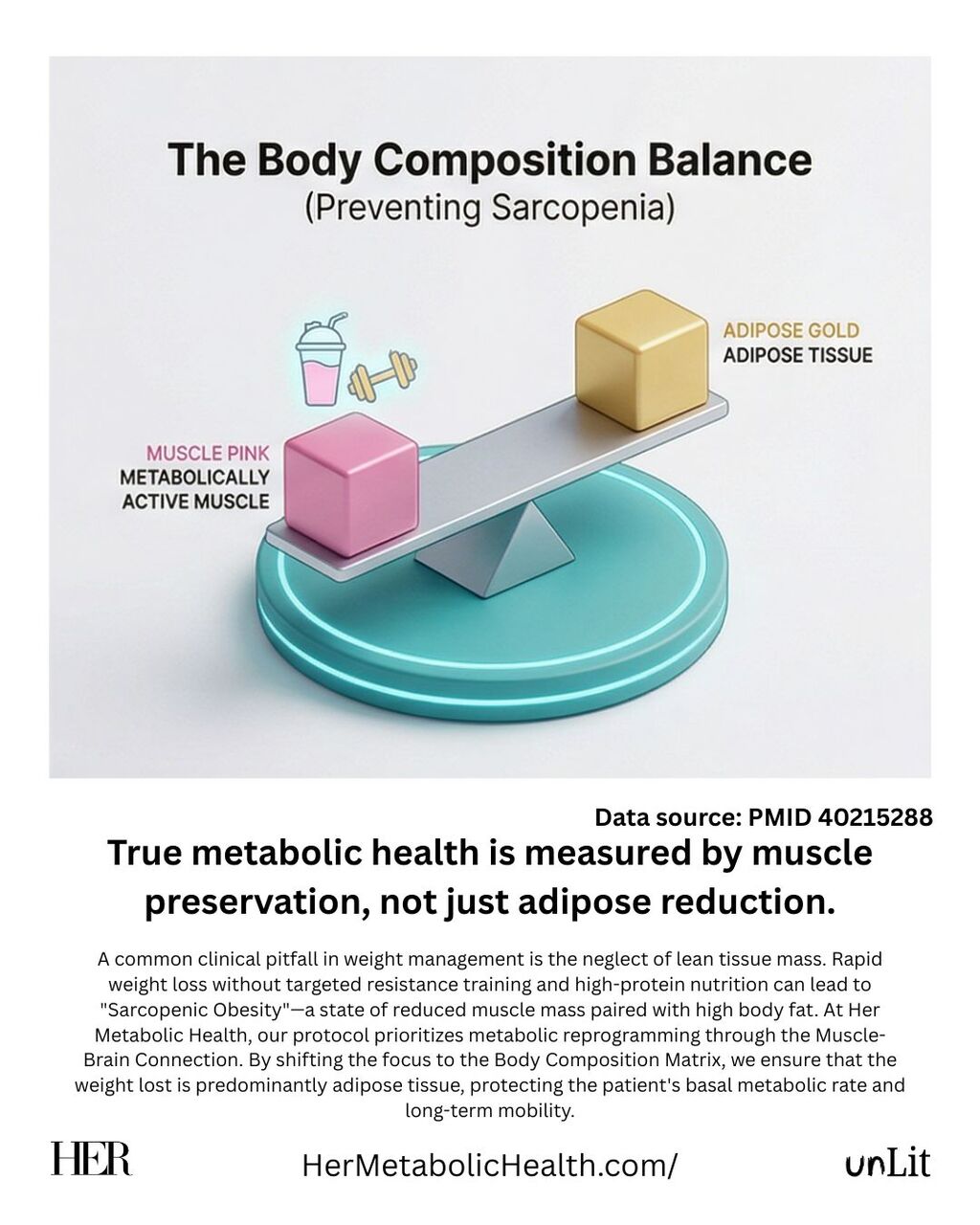
True metabolic health is measured by muscle preservation, not just adipose reduction. A primary pitfall in weight management is the neglect of lean tissue mass.
Rapid weight loss without targeted resistance training and high-protein nutrition can lead to Sarcopenic Obesity—a state of reduced muscle mass paired with high body fat. Our protocol prioritizes the Body Composition Matrix, ensuring that weight lost is predominantly adipose tissue. This protects the patient's basal metabolic rate (BMR) and ensures long-term mobility.
Clinical Reference: PMID 40215288